
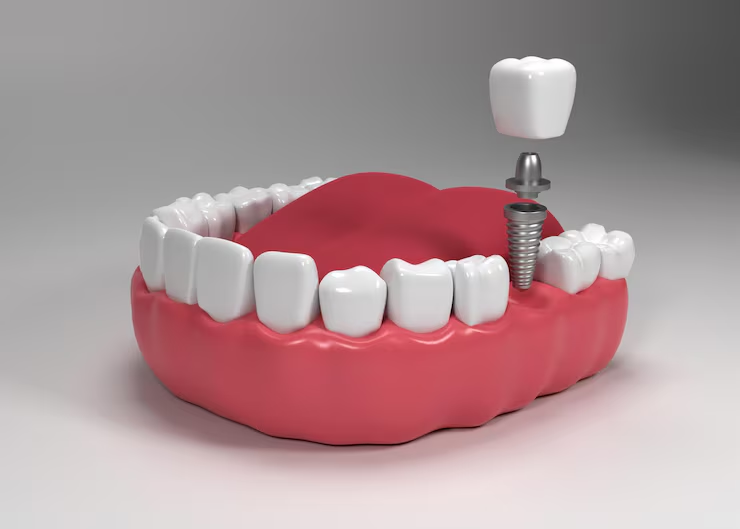
Missing teeth can make it hard to chew food and change the way your smile looks. Dental implants are small posts placed in the jawbone to replace missing tooth roots. They hold replacement teeth, such as crowns or bridges, in place. These teeth help you chew better and fill the gaps in your smile. Dental implants in North Port may be a good option for people who want a fixed replacement for one or more missing teeth.
Dental implants are designed to function like natural tooth roots, but they require proper planning, time to heal, and daily care. The right treatment depends on how many teeth are missing, the health of your gums and jawbone, and your overall health. Learning how dental implants work, what happens during treatment, and how to care for them can help you decide if they are right for you.
What Are Dental Implants, and How Do They Work?
A dental implant is a small post, usually made of titanium, that is placed in the jawbone to replace a missing tooth root. As the area heals, the bone grows around the post and helps keep it firmly in place.
A dental implant usually has three parts:
- Implant post: The part placed in the jawbone to hold the new tooth.
- Connector: The part that joins the implant post to the new tooth.
- Crown: The visible part that looks and works like a natural tooth.
Dental implants can support a single replacement tooth, a bridge to replace several missing teeth, or dentures that attach to the implants.
How Do Dental Implants Replace Missing Teeth and Restore Chewing?
Missing teeth can leave gaps that make biting and chewing harder. Dental implants provide support for replacement teeth, helping restore the ability to chew a wider range of foods when healing is complete.
Unlike removable dentures, an implant-supported crown is fixed in place. This can help it feel more stable during meals. Implants also transfer some chewing pressure to the jawbone, which may help reduce bone loss in the area. However, they do not prevent all changes in the jawbone.
If you are exploring dental implants near you, a dental assessment can help identify which type of replacement may work for your needs.
What Are the Main Steps in the Dental Implant Procedure?
Dental implant treatment usually takes place over several stages. The exact process depends on your oral health and whether extra treatment is needed.
- Dental examination: A dentist near you checks your teeth, gums, and jawbone. X-rays or other scans may be used to plan treatment.
- Treatment planning: The dentist decides how many implants are needed and where to place them. Any gum problems or other dental issues may need to be treated first.
- Implant placement: The dentist places the implant post into the jawbone during surgery.
- Healing time: The bone needs time to grow around the implant and hold it in place. This often takes several months.
- Adding the new tooth: Once the implant has healed, the dentist attaches a crown, bridge, or denture to it.
Some people may need bone grafting if there is not enough jawbone to support an implant. A dentist in North Port can explain the expected timeline and whether additional steps may be needed.
Who May Be a Suitable Candidate for Dental Implants?
Dental implants may suit adults with one or more missing teeth who want a fixed replacement. Good candidates generally have healthy gums, enough jawbone to support the implants, and the ability to heal after surgery.
Some health problems and daily habits can make healing harder. For example, high blood sugar that is not well controlled and smoking may increase the risk of problems. These do not always mean you cannot get dental implants, but your dentist may need to plan your treatment more carefully.
A dental office near you can review your medical history, current medicines, gum health, and jawbone condition to help determine whether implants are appropriate.
How Should You Care for Dental Implants?
Dental implants need daily cleaning and regular dental checkups to keep the gums healthy. The replacement tooth cannot get cavities, but plaque can build up around the implant and cause gum problems.
To care for dental implants:
- Brush your teeth twice a day with a soft toothbrush.
- Clean between your teeth and around the implant every day using the right cleaning tools.
- Attend regular dental checkups and professional cleanings.
- Avoid chewing hard objects, such as ice.
- Tell your dentist about pain, swelling, bleeding, or looseness around an implant.
With good care, implants can function for many years, although the crown or other replacement parts may need repair or replacement over time.
Take the Next Step Toward Replacing Missing Teeth!
Living with missing teeth can affect everyday comfort, from eating meals to speaking with ease. Contact Riverside Smiles to arrange a consultation, discuss your concerns, and learn which tooth replacement options may suit your needs. A personalised assessment can help you understand the treatment process, expected healing time, and care required after treatment.
FAQs
How do dental implants replace missing teeth?
A dental implant replaces the root of a missing tooth. After the implant heals, a crown, bridge, or denture is attached to fill the gap and help you chew food more easily.
Are dental implants right for everyone?
No. Healthy gums, a strong jawbone, your medical history, and your ability to heal all matter. A dentist will assess your oral health to determine whether dental implants are a good option for you.
How long does the dental implant process take?
The process often takes several months because the implant needs time to join with the jawbone. Treatment may take longer if bone grafting or other procedures are needed.
Are dental implants difficult to care for?
No special routine is usually needed beyond careful daily cleaning and regular dental visits. Cleaning around the implant is important because the gums can still develop problems.